
_edited.png)

The Athletic Shoulder Test (ASH Test): Return-to-Sport Testing for Shoulder Injuries

Is Your Shoulder Really Ready to Return to Sport?
One of the most common questions we hear at Praxis Physical Therapy is:
"My shoulder feels good...but am I actually ready to return to sport?"
After a shoulder injury or surgery, many athletes regain their motion and experience little to no pain. They may even feel strong during everyday activities. However, returning to throwing, serving, swimming, lifting, or contact sports places far greater demands on the shoulder than daily life.
This is where objective testing becomes valuable.
At Praxis Physical Therapy, we use the Athletic Shoulder Test (ASH Test) to measure shoulder strength using force plate technology. Rather than relying only on how a shoulder feels, the ASH Test provides measurable data that helps us determine whether an athlete is progressing appropriately and when they may be ready to safely return to sport.
What Is the Athletic Shoulder Test?
The Athletic Shoulder Test (ASH Test) is an evidence-based assessment developed by Ben Ashworth and colleagues to objectively evaluate shoulder force production in athletes.
During the test, you lie comfortably on a treatment table while pushing into a force plate in several standardized arm positions. Each effort lasts only a few seconds, but the force plate measures exactly how much force your shoulder produces.
Unlike traditional strength testing, the ASH Test provides objective numbers that can be tracked throughout rehabilitation.
We can evaluate:
Overall shoulder strength
Side-to-side differences
Progress throughout rehabilitation
Readiness for higher-level activities
Return-to-sport decision making
Why Isn't 'Pain-Free' Enough?
Pain-Free is only one part of recovery.
Many athletes have little or no pain but still have significant strength deficits that aren't obvious during a routine examination.
Likewise, having full range of motion doesn't necessarily mean your shoulder is ready to tolerate the demands of pitching a baseball, serving a volleyball, performing Olympic lifts, or swimming thousands of yards each week.
Objective testing helps us identify these hidden deficits before they become setbacks.
Clinical Pearl: A pain-free shoulder isn't always a performance-ready shoulder.
Why Not Just Test Strength by Hand?
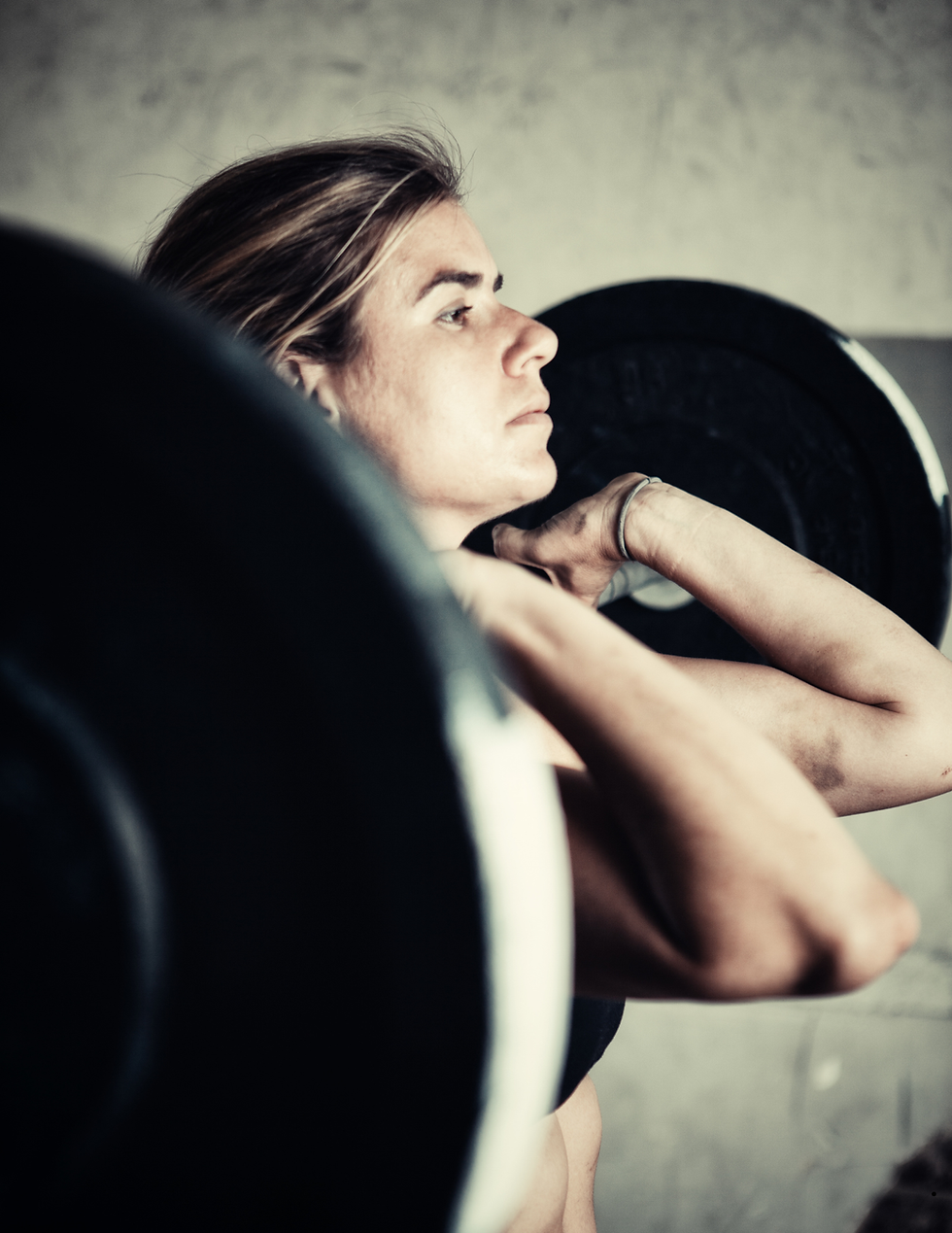
Physical therapists commonly use Manual Muscle Testing (MMT) to assess strength. While this remains an important part of a clinical examination, it has limitations for athletes.
Most healthy athletes quickly reach a "5/5" strength grade, even though there may be meaningful differences in their actual force production.
For example, a collegiate baseball pitcher and an active recreational athlete could both receive a perfect manual strength score despite having very different levels of shoulder performance.
The ASH Test provides objective measurements that are much more sensitive to these differences.
How Does the ASH Test Work?
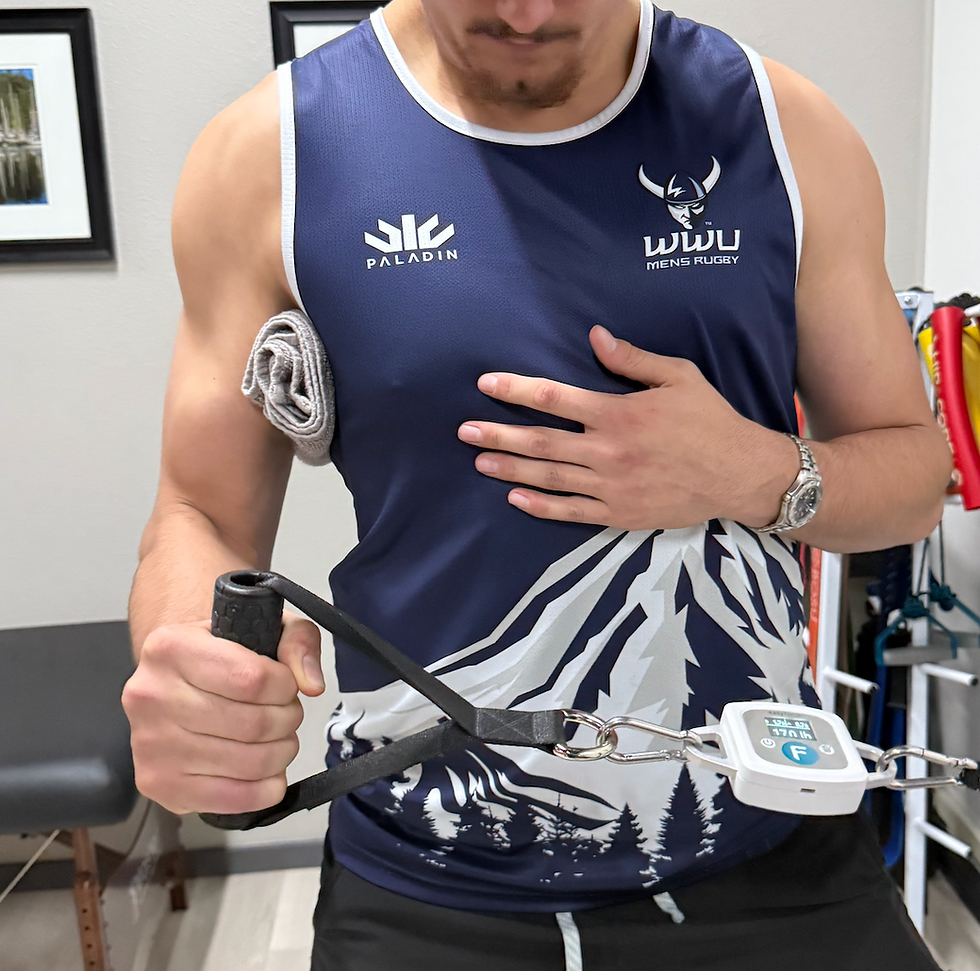
The ASH Test uses a force plate to measure maximal isometric force production.
"Isometric" simply means your muscles are working hard without your arm moving.
Because the shoulder remains in a standardized position during testing, results are highly reliable and easy to compare over time.
This allows us to monitor your progress throughout rehabilitation instead of relying solely on observation or subjective feedback.
The Three Testing Positions
The ASH Test evaluates the shoulder in three different arm positions, each challenging the muscles differently.
I Position

The arm is positioned overhead in line with the body.
This position emphasizes shoulder stability and force production in an overhead position commonly seen in swimmers, throwers, and overhead athletes.
Y Position

The arm is positioned at approximately 135 degrees.
This position places greater demand on the rotator cuff and scapular stabilizers while simulating many athletic overhead movements.
T Position

The arm is positioned directly out to the side.
This challenges the posterior shoulder and scapular muscles responsible for controlling shoulder stability during throwing, serving, lifting, and contact sports.
Testing multiple positions provides a more complete picture of shoulder function than evaluating only one movement.
Position | Primary Focus | Common Sports |
I | Overhead stability | Swimming, Baseball, Volleyball |
Y | Rotator cuff & scapular control | Tennis, CrossFit, Throwing |
T | Posterior shoulder strength | Rugby, Baseball, Weightlifting |
Who Can Benefit from the ASH Test?
The ASH Test is valuable for anyone whose sport places high demands on the shoulder.
This includes:
Baseball and softball players
Volleyball athletes
Tennis and pickleball players
Swimmers
CrossFit athletes
Olympic weightlifters
Rugby players
Football players
Rock climbers
Gymnasts
Tactical athletes
Active adults recovering from shoulder injuries
It is also useful following surgery such as:
Rotator cuff repair
Labral repair
Bankart repair
SLAP repair
Latarjet procedure
Shoulder stabilization surgery
How We Use the ASH Test at Praxis Physical Therapy
At Praxis Physical Therapy, the ASH Test is never used by itself.
Instead, it becomes one part of a comprehensive evaluation that includes:
Clinical examination
Shoulder range of motion
Strength assessment
Movement analysis
Patient-reported outcome measures
VALD ForceDecks testing
VALD Dynamo strength testing
Anterior Shoulder Endurance Test
Posterior Shoulder Endurance Test
Sport-specific movement assessment
Together, these objective measures help us make informed decisions about rehabilitation progression and return to sport.
No single test determines whether someone is ready—but objective data helps us make better decisions.
Why Objective Testing Matters
Objective testing offers several important advantages:
Tracks progress throughout rehabilitation
Identifies side-to-side strength differences
Detects deficits that may not be obvious during routine examination
Builds athlete confidence
Helps guide return-to-sport decisions
Provides measurable goals during rehabilitation
Most importantly, it helps answer one of the biggest questions athletes have:
"Am I truly ready?"
Frequently Asked Questions
Does the ASH Test hurt?
Most people tolerate the test very well. Because the contractions are brief, discomfort is generally minimal. Testing is always modified if symptoms increase.
How long does the test take?
Most ASH testing sessions take approximately 15–20 minutes as part of a comprehensive shoulder evaluation.
Can I do the test after surgery?
Yes. The timing depends on your specific procedure and stage of healing. Your physical therapist will determine when it is appropriate to begin objective strength testing.
How often should I be tested?
Many athletes benefit from testing every 4–8 weeks to objectively monitor progress during rehabilitation.
Does insurance cover the ASH Test?
Coverage depends on your individual insurance plan and how testing is incorporated into your physical therapy evaluation and treatment.
The Bottom Line
Recovery isn't simply about eliminating pain—it's about restoring the strength, stability, and confidence needed to safely return to the activities you love.
The Athletic Shoulder Test provides objective information that complements a thorough physical examination, helping clinicians make more informed rehabilitation decisions and giving athletes measurable milestones along the way.
At Praxis Physical Therapy, we believe the best rehabilitation combines clinical expertise with objective data to create individualized treatment plans that support a safe and confident return to sport.
Schedule an Evaluation
Whether you're recovering from surgery, managing shoulder pain, or preparing to return to competition, we're here to help.
Praxis Physical Therapy in Bellingham offers evidence-based rehabilitation, objective performance testing, and one-on-one care tailored to your goals.
Contact us to learn how the Athletic Shoulder Test can become part of your recovery journey.
References
Ashworth, B., et al. (Foundational publications describing the Athletic Shoulder Test.)
Cools, A. M., et al. (2015). Rehabilitation of scapular dyskinesis: From the office worker to the elite overhead athlete.
Kibler, W. B., & Sciascia, A. (2016). Current concepts in shoulder rehabilitation for overhead athletes.
McLaine, S. J., et al. (2021). Objective shoulder strength testing in overhead athletes: A systematic review.
Wilk, K. E., Macrina, L. C., & Reinold, M. M. Current concepts in return-to-sport testing following shoulder injury.


Comments